I’ve kept my head (mostly) down so far in this election for a simple reason: over the past two years in particular and sporadically before that, I have given a lot of advice to the Government of Canada on the implementation of national climate change policies. The Liberal plan is, in many aspects, rooted in the policies I helped design in Alberta. I worried that these factors would lead some of you to question my objectivity and I wondered if it was right to publish something with only a short caveat on this potential conflict. But, with only a few days left in the campaign, I’ve had a number of people ask where I stand, and so let me tell you below. If you choose to disregard what follows because I’ve been in a room with Prime Minister Trudeau giving policy advice a few times, because of my work in Alberta, or because I worked on implementing one of the Harper government’s climate change plans, so be it.
To put it bluntly, there is only one climate vote in this election, and it’s a vote for Prime Minister Trudeau and the Liberals.
The Conservatives have made substantial progress since 2019, and they’ve done the work that the NDP and the Greens should have done to shore up their climate platform commitments through expert advice. I just don’t think they’re wedded to it. In fact, they’re already waffling. They will not be willing to do the necessary work to build on or even to maintain our current policy progress. Their signature policy, the low carbon savings account, is an attempt to have it both ways – a carbon price that isn’t really a carbon price. To make this magic trick happen, they’ve proposed a multi-billion-dollar spending program that will be administered by some third party and that will be an administrative and privacy nightmare.
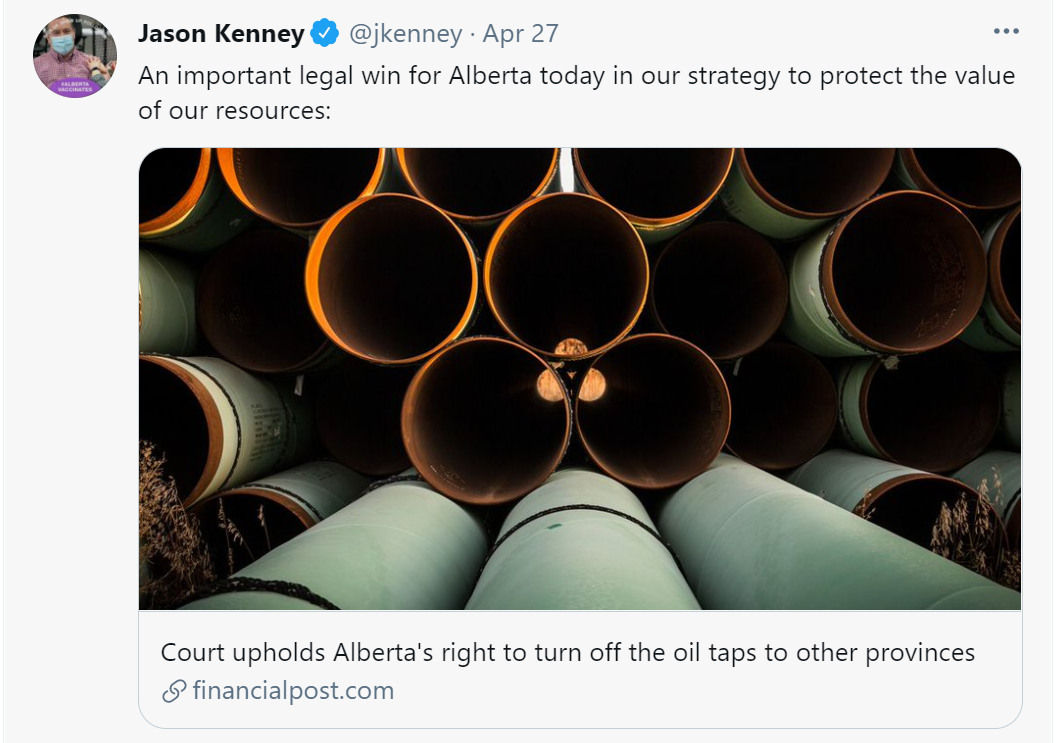
I wanted to believe that the platform was Erin O’Toole crossing the metaphorical Rubicon, and that he’d be willing to keep pushing on this issue despite opposition from provincial premiers and some in his back benches. To me, O’Toole’s stubborn unwillingness to say anything negative about the COVID situation in Alberta or his ever-changing firearms policies indicate that such resolve is not in his arsenal. He’s just not going to be willing to fight the fights. The carbon pricing plan is likely to fall by the wayside at the first meeting of the Premiers if not before and, like the Harper-era Turning the Corner plan or the Harper-era North American cap and trade program or the Harper-era sector-by-sector regulatory approach, there will always be a policy to come, but I fear it will never actually arrive because it might upset Jason Kenney, Doug Ford or those in his caucus who don’t believe climate change is real.
The NDP? They had two years to shore up their climate platform and they’ve done next-to-nothing. There are few differences from the NDP plan that I criticized in 2019, despite the addition of prominent climate-concerned candidates. They’ve been content to repeat mantra about climate emergencies and fossil fuel subsidies and analogies to the war effort while they could not even be bothered to detail specific policy choices. It’s not hard: plenty of groups have done much more work on the subsidies issue, for example, and NDP governments in Alberta and BC have done detailed policy work too. There was plenty for them to draw on, so they just seem to have chosen not to do so.
When experts like Mark Jaccard and Jennifer Winter pointed out the lack of detail in the NDP platform, both candidates and surrogates lashed out, amplifying fringe conspiracy theories about Jaccard and suggesting that Winter, one of the most widely-cited academics working on Canadian climate policy, should be disregarded because of her volunteer work on a couple of boards with connection to the fossil fuel industry. I’m not going to link to those attacks here, but I’ll give them the link to my disclosure page in case they find it useful to attack me too. Action on climate change takes more than slogans and hit pieces. The NDP is not short on ambition, but unless they put in the hard work of spelling out the policies that will get them there, it is just aspiration without a plan.
As for the Greens, they barely merit a mention. This should be their issue. They should know more, have more sophisticated policies, and draw on the best evidence. They don’t. Their platform demonstrates the opposite. There are many examples; their policy proposals read more like a whiteboard at a brainstorming exercise than a coordinated and well-thought-out policy approach, but two commitments in particular stood out for me. The first is a small one, the commitment to “change the national building code to require that all new construction and major renovations to older buildings meet net-zero standards by 2030.” This conveniently ignores the fact that the national building code isn’t binding in almost all cases, and exists only as a model that provinces and territories may choose to adopt.
The more significant example in the Green plan is the scale of disruption being proposed in the electricity sector in a single bullet point: a requirement for fully renewable generation by 2030, with the definition of renewables not including nuclear power. That would mean shutting down the lion’s share of generation in Alberta and Saskatchewan and a large share in other provinces including Ontario. Their commitment this time around is more aggressive than commitments made in 2019 and 2030 is now only a little more than eight years away. And, no matter how often you say the word emergency, electricity generation remains almost entirely under provincial jurisdiction. They might as well write that they’re going to give us each a fairy godmother which, come to think of it, would come in handy if we’re going to create a national electricity transmission corridor and build intertie lines across the country by next Tuesday.
These three platforms each fail to wrestle with or even to acknowledge the biggest challenge to climate policy in Canada: that a lot of what needs to be done lies within provincial jurisdiction and the tools at the disposal of the federal government are relatively limited. One party knows this well, and bears the scars to prove it: the Trudeau Liberals.
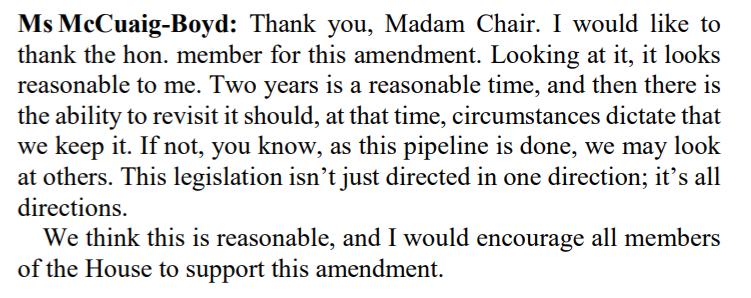
National carbon pricing policy, meaningful consideration of climate change in major project approvals (the much-maligned Bill c-69), and regulatory standards for clean fuels each faced, or in some cases still face, concerted opposition from provincial governments. The Trudeau government had to fight for every inch of their policy progress in the courts, in the election campaigns of 2015 and 2019, and almost every day in between. And, at every step, they were fighting The Resistance – the coalition of conservative provincial premiers and their allies in the opposition and Senate benches in Ottawa committed to stopping progress on climate policy in Canada. And they are prepared to continue to do so. The others? They either ignore the issue or, in the case of O’Toole’s Conservatives, promise to let the premiers drive the bus. You can bet the bus won’t be electric.
The Liberals have used all the advantages of incumbency to build their platform. Their proposals have, largely, been tested and modelled by the machinery of government. The Liberal plan isn’t perfect and it too has some unanswered questions in terms of policy implementation, but the answer to the biggest question in Canadian climate policy has already been answered. We know that Justin Trudeau and those around him are willing to fight for these policies, and that they understand the roles of the provinces while also embracing the role of the federal government in legislating for the country as a whole. Those who wish to take their place fail on at least one of those two measures, and all the ambition in the world won’t get you meaningful climate policy in Canada if you don’t tick both of those boxes.
If climate change is your issue, you should vote for the party that understands both the challenge of climate change and the path to a solution. In this election, that’s the Liberals.